


BRANCHING LOGIC

Branching Logic

Native Plant Ecologies as Computational and Textile Pattern

Project Overview

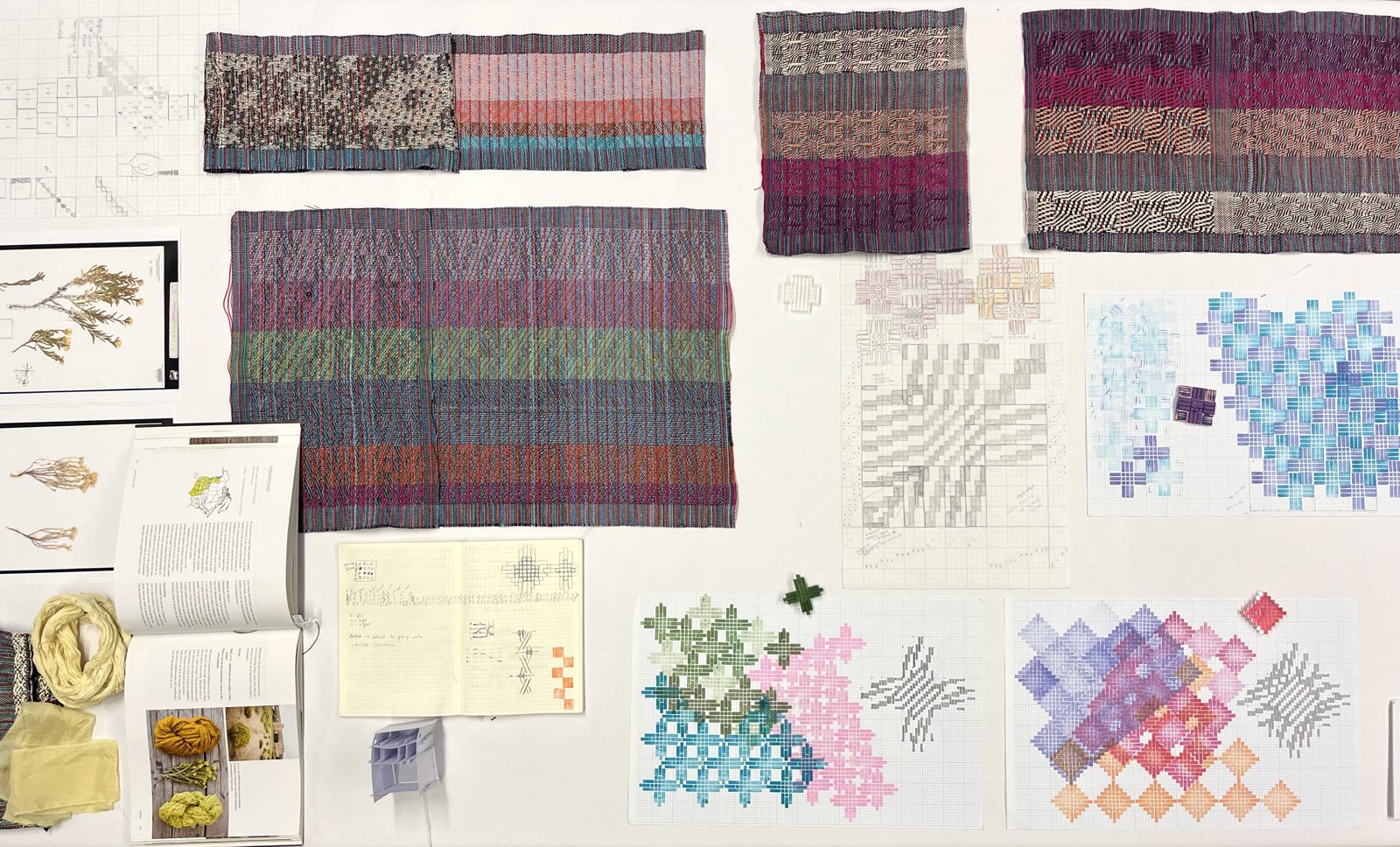
A table seen from above, covered in woven samples, aster drafts and stamp tilings on graph paper, rabbitbrush herbarium prints, a sketchbook, and rabbitbrush-dyed yarn and silk beside the Harvesting Color book

This project is an investigation into Colorado native plants as both subject matter and methodological guide. Working across textile craft, computational design, and local botany, the project asks: what can we understand about the innate logic of living systems when viewed through lenses of craft and computation? We orient our interdisciplinary practices toward discovery and curiosity, exploring plants of the Front Range and identifying a set of native species to deeply investigate, attending to their physical structure, natural dye properties, medicinal uses, and climate vulnerability.

Through material engagement in cloth and computational design in code, the project produces a public exhibition featuring a collection of woven samples inspired by local flora and a multilayer woven textile installation, this interactive website, and open-source generative weave drafting tools based on local plants.

Research questions

  • How does sampling function as a cross-disciplinary methodology?

    In weaving, sampling is the material exploration that precedes a finished cloth. In software design, it is the sketch that tests a system's behavior before it is built out. This project treats sampling not as a prelude to "real" or "final" work but as a shared practice that resists pre-determined outcomes and keeps discovery possible.

  • How do generative design tools facilitate or foreclose open inquiry?

    Parametric and generative tools carry assumptions about what a "design" is and how it is reached. We examine those assumptions by building native plant-inspired weave drafting tools inside an open source weave drafting software tool oriented toward plurality and surprise rather than a deterministic outcome.

  • What designs emerge from tools inspired by plant systems?

    Natural systems, like those of plant structure, growth, and ecology, are often seen as distinct from our human-designed digital tools. This research explores what unexpected designs may emerge when the patterns and structures of these natural systems are applied to digital algorithms and then translated again into woven textile.

What we're making

  • A public exhibition: a display of our work at the Boulder Public Library, showing our thought process alongside woven examples and the plants that inspired them.
  • An interactive website: this site, a public digital companion documenting the plant–pattern–weave relationships in the project, including each featured native species' visual qualities, dye properties, medicinal uses, and climate status.
  • Open-source software tools: all design tools created through this project are free and online for others to use and explore in their work, hosted through AdaCAD, a weaving design tool made and maintained by researchers at CU Boulder.

Our team

  • Deanna Gelosi

    Deanna Gelosi (MS in Computer Science, ATLAS PhD Student) brings expertise in designing software tools for creative craft practices that facilitate material and computational discovery, and prior work experience in public science engagement in informal science spaces.

  • Etta Sandry

    Etta Sandry (MFA in Fibre & Material Practices, ATLAS PhD Student) brings a developed interdisciplinary art practice rooted in weaving, a deep investment in craft sample-making as experimental praxis, and a material sensibility attuned to structures that disrupt and complicate weaving's binary form.

  • Charlotte Bertanzetti

    Charlotte Bertanzetti (Computer Science undergraduate) brings a background in fiber arts and designing computational tools for weaving.

Our Plants

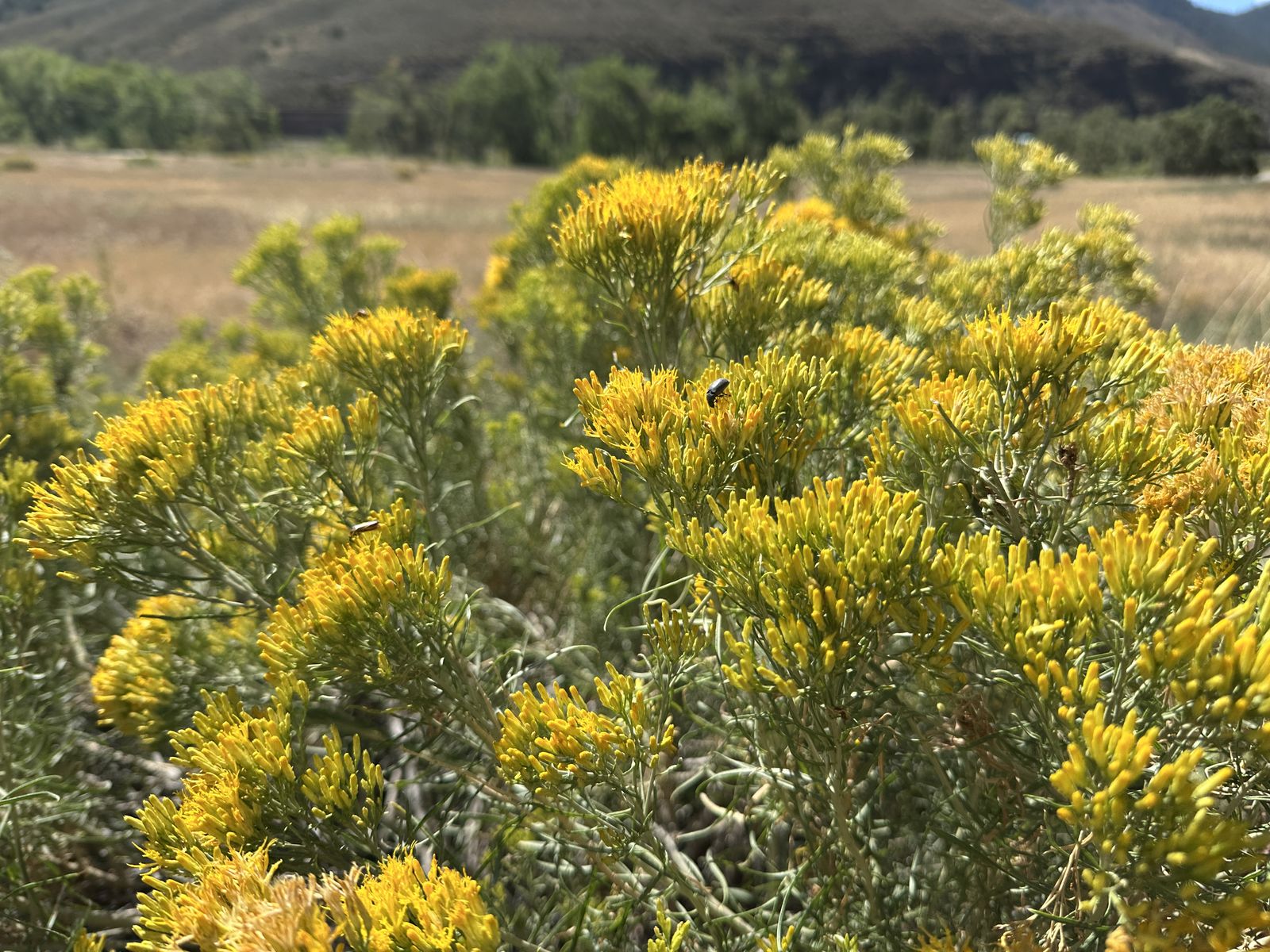
Close-up of rabbitbrush flowers

Rabbitbrush

Ericameria nauseosa

A gray-green shrub that gets covered in small yellow flowers in late summer. It grows in dry, open places all over Colorado, from the plains and roadsides up into the mountains. We use its flowers for natural dyeing, and the way its stems split into smaller branches inspires our branch operation.
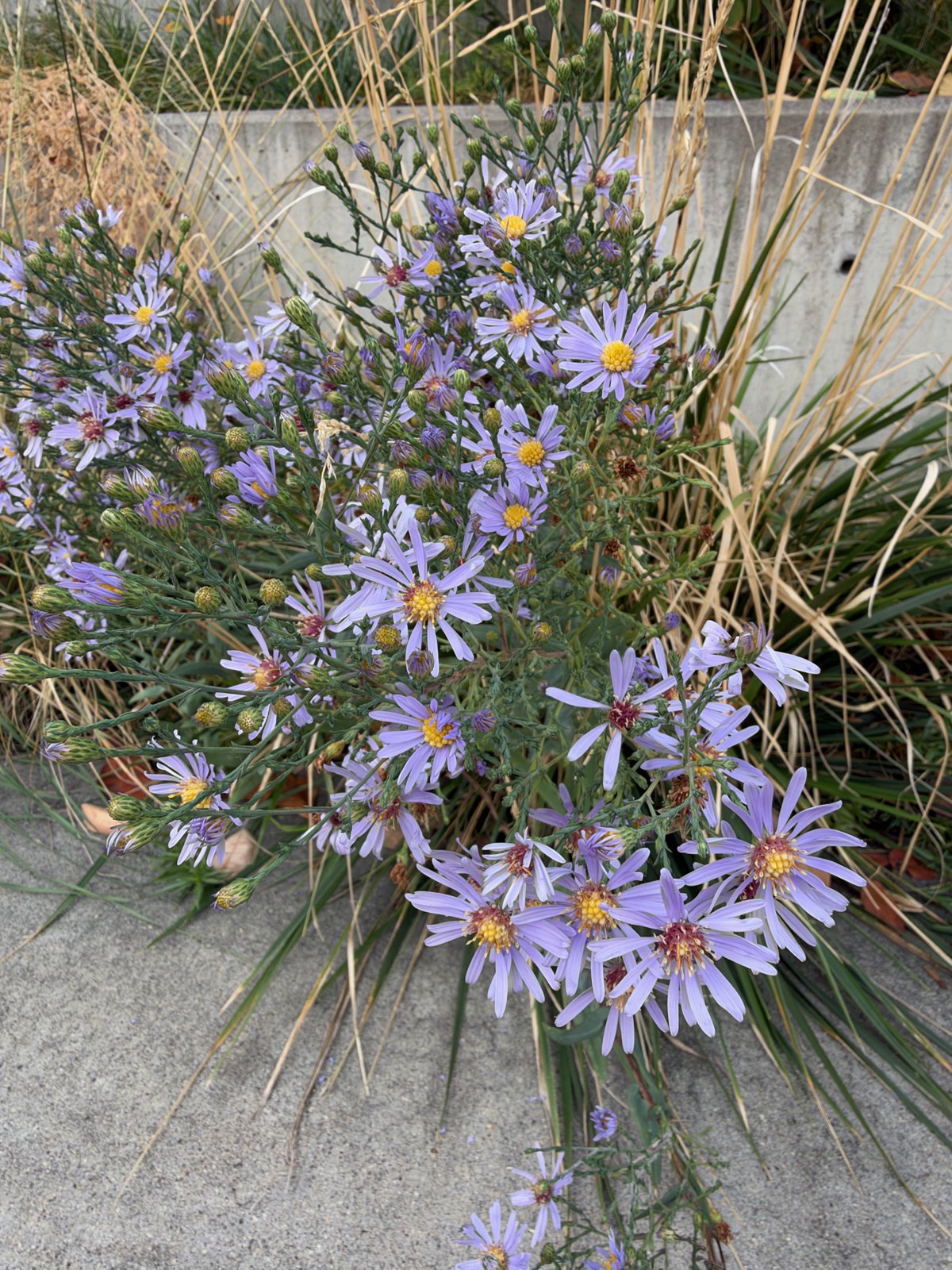
A bush of light purple asters with yellow centers

Aster

Asteraceae (the aster family)

What looks like one purple, daisy-like flower is really a head of many tiny flowers, with purple petals around a yellow center. We're studying these small flowers within a larger flower to create a stamping operation that connects small units into one bigger pattern.

NEST

Branching Logic is a 2026 Graduate Summer Fellowship project from NEST Studio for the Arts, awarded in partnership with SPIKE. NEST (Nature, Environment, Science & Technology) Studio for the Arts is a campus-wide initiative within CU Boulder's Grand Challenge that explores the interrelation, generative overlaps, and productive differences between arts-based and science-based disciplines.

Acknowledgements

We would like to thank:

  • Amber Horning, Collections Manager, University of Colorado Herbarium
  • David Hirt, Raquel Robles, and the Volunteer Guides at Boulder County Parks & Open Space
  • Jacob Watts and Erin Manzitto-Tripp, Ecology and Evolutionary Biology, University of Colorado Boulder
  • Erin Espelie, Joanne Marras Tate, and Tara Knight at NEST Studio for the Arts, and the NEST/SPIKE Summer Graduate Student Fellowship
  • The Unstable Design Lab
  • The ATLAS Institute

Explore